
How Psychic Affiliates Build Trust and Generate Sales

People who believe in psychic readings often arrive with a practical question as well as a spiritual interest. They may want to understand a tarot session, choose between phone and chat, or find a reader they can approach comfortably within their budget.
A useful affiliate helps them make those decisions. Clear explanations, considerate recommendations and an easy route to the right service can support a booking while giving the visitor something valuable before they spend anything.
Building that kind of business starts with understanding the journey from a question to a qualified referral. Here is how to improve the parts you control and measure what happens afterward.
1. Begin with a specific reader question
Choose the people you can help most clearly. A first-time caller may need reassurance about the process and charges. Someone who enjoys tarot may be comparing a live conversation with a written response. A visitor exploring mediumship may want to understand the format and prepare thoughtful questions.
For each page, finish this sentence: “After reading this, the visitor will understand ____.” A focused purpose helps you choose what belongs on the page and which link would be useful next.
Match the next step to the question. An article about dream symbolism can invite reflection or offer related reading. A format guide can lead to a comparison. A pricing explanation can point to the provider's current terms when the visitor is ready to check them.
Keep the spiritual welcome. Write with respect for intuition, tarot and mediumship, while making the practical details easy to understand. Visitors should be able to explore their beliefs and make an informed purchasing decision at their own pace.
2. Choose an affiliate arrangement you can explain
Look at the qualifying action, attribution rules, permitted traffic, marketing materials, reporting and payment terms together. A headline commission is only one part of the arrangement.
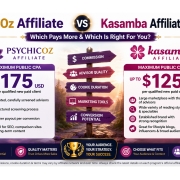
Start by evaluating PsychicOz. Its published affiliate FAQ describes a one-time $175 USD commission after an eligible new client has spent at least $101 USD. It also describes referral links, marketing tools and reporting. A click or an initial purchase does not automatically meet that qualification.
Confirm the complete terms that apply to your account, including the tracking window and payout schedule. If public pages disagree, obtain clarification before planning around either version.
Other arrangements may pay a percentage of qualifying purchases, or involve an agreement directly with an independent reader. For revenue share, check eligible transactions, exclusions and duration. For a direct relationship, agree on tracking, reporting, creative permissions and payment before recommending the service.
Our psychic affiliate program comparison offers a structured way to evaluate those decisions. Keep a customer's budget separate from your commission qualification: the customer's spending limit should guide their booking.
3. Make commercial recommendations transparent
Explain the financial relationship near the recommendation. A publisher paid for referred bookings might say: “We may earn a commission if you book through links on this page.” Use wording that accurately describes your arrangement, and make it easy to notice on a phone.
The FTC's endorsement guidance explains the importance of clear, conspicuous disclosures. A label that assumes readers already understand affiliate marketing may leave the relationship unclear.
Give the reason for a recommendation and explain any paid placement or commission influence. Keep examples and personal experiences accurate. An invented reading or customer success story should never become evidence in a review.
A clear recommendation names the relevant feature and its condition. For example: “Consider a written service if you want time to formulate your question; check the response deadline and whether follow-up is included.” That gives readers something concrete to evaluate.
4. Compare the details that affect a reading
Use the same criteria across services: format, billing, minimum purchase, delivery, follow-up, privacy and support. Differences become easier to understand when the comparisons answer the same questions.
A live chat transcript, an email reading and a paid direct message are different purchases. Explain what each includes rather than grouping them together as unlimited written guidance. When information is missing, identify what the visitor needs to confirm.
Google's review guidance encourages useful comparisons, original evidence and explanations of benefits and drawbacks. Support a “best” recommendation with a clear reason and the relevant evidence.
One manageable editorial project is to compare how providers explain when charges stop. Record the instructions you inspected, the page date and anything left unclear. That can help visitors prepare without pretending to measure psychic ability or predict how an individual session will feel.
For a wider look at selecting an offer, read whether psychic affiliate programs are worth it.
5. Connect helpful content to a clear next step
Give each page a descriptive title and headings that help people find its answer. Link related decisions: a format explanation can lead to preparation, and preparation can lead to a cost comparison.
Choose link text that tells people what they will find. “Check phone reading formats and current prices” gives more context than “Click here.” A preparation worksheet can be the right next step for someone still gathering questions.
Check the destination itself. If your link promises email reading options, it should lead to a relevant, approved page. Explain when someone is leaving your site for the provider's booking process, and keep the referral parameters intact.
Let the information do the work. Visitors do not need an invented countdown or a suggestion that delaying a booking will have spiritual consequences. A comfortable decision leaves room for a person to return later.
6. Make social content useful on its own
Build a short lesson around a question your audience already asks. A video could show how to turn a broad concern into two open reading questions. A carousel could explain the difference between live chat and a written response.
Then connect the lesson to a matching resource. Someone saving a preparation video may appreciate a printable question planner. Someone comparing formats may want a more detailed guide before visiting a provider.
Use clearly identified fictional examples when illustrating a situation. Describe real experiences accurately, and include a relevant commercial disclosure within the content when one is needed. A profile-page disclosure alone may be too far from the recommendation.
Reply helpfully to general questions while leaving personal reading details out of public comments. Let people choose to follow a link or ask for more information rather than sending unsolicited sales messages.
7. Build an email sequence people choose to receive
Offer a specific reason to subscribe, such as a preparation sheet or a short series on understanding reading formats. Explain what messages people will receive and use an appropriate permission process.
A simple sequence can do three useful jobs:
- Deliver the resource. Help the subscriber use what they requested.
- Answer a practical question. Explain budgeting, formats or preparing an intention.
- Offer a relevant comparison. Include the information needed to consider a recommendation, along with its commission disclosure.
For U.S. commercial email, the FTC's CAN-SPAM guide covers accurate sender details, truthful subject lines, clear identification of advertising, a valid postal address and an easy opt-out process. Honor opt-outs within the required time. Check the rules that apply wherever you operate and send messages.
Make unsubscribing simple and test that it works. A person should not have to explain their private circumstances to stop receiving marketing.
8. Check the route from recommendation to provider
Try the journey on a phone and a desktop. Can someone read the comparison, understand the link and reach the promised page? Check that menus, consent notices and images leave essential information visible.
Review broken links and confusing destinations before concluding that visitors are uninterested. A clear article can still lose a useful referral if its button opens the wrong page.
Use only tracking methods the program permits. Label campaigns by content or channel, such as phone-preparation-guide. Keep visitor names, birth details and private questions out of tracking links and analytics events.
Collect only what a feature needs. A downloadable preparation sheet can often work without an account or personal history. If a feature collects information, explain what happens to it and make sure the explanation matches the actual setup.
9. Separate clicks, qualification and payment
Think of reporting as a sequence of distinct events:
- A visitor reads your content.
- They click a referral link.
- An attributed customer completes the program's qualifying action.
- The program approves the commission.
- Payment is received under the applicable terms.
The program may report intermediate stages differently. A visit, an outbound click, a purchase and an approved commission are not interchangeable totals.
A worked example: traffic and earnings are different measures
The following fictional campaigns assume $100 USD for each approved referral. The amounts illustrate the arithmetic and are not a quote from an affiliate program.
| Measure | Campaign A | Campaign B |
|---|---|---|
| Website visitors | 2,000 | 1,000 |
| Outbound referral clicks | 60 | 120 |
| Approved referrals | 6 | 12 |
| Outbound clicks ÷ visitors | 3% | 12% |
| Approved referrals ÷ outbound clicks | 10% | 10% |
| Gross approved commissions | $600 | $1,200 |
| Listed campaign costs | $630 | $700 |
| After listed campaign costs | −$30 | $500 |
Both campaigns have the same click-to-approved-referral rate in this example. Campaign B has more outbound clicks despite fewer visitors. The table does not explain why; visitor intent, page content, link placement and the destination all deserve a closer look.
The last row is before other expenses and taxes. Include content production, software, administration and other relevant costs before treating a campaign's result as business profit.
Two useful calculations are:
- Approved earnings per referral click: approved commission value ÷ outbound referral clicks.
- Cost per approved referral: relevant campaign costs ÷ approved referrals.
Use a consistent reporting period and comparable groups of referrals. Recent clicks may still be awaiting qualification, while this month's payments may relate to earlier activity. For more on that comparison, see which psychic affiliate program converts best for your traffic.
10. Test an improvement you can explain
Start with a real source of confusion. If visitors ask whether chat transcripts remain available, verify the answer and improve that section before experimenting with a button color.
Write a short test note: the problem, the change, the result you hope to observe and the period you will review. Keep other major elements reasonably stable. Changing the offer, article, audience and destination together makes the result harder to interpret.
A higher click rate alone does not establish a better experience or greater profit. Check the relevance of referrals, approved earnings, costs and feedback together. Small samples and delayed qualification can make early results uncertain.
Before using paid traffic, set a spending limit and check the program's advertising restrictions. Do not scale a campaign solely because pending commissions look promising. Our guide to published commission rates and qualifying conditions helps separate the advertised payout from the action needed to earn it.
A weekly routine for useful recommendations
Check the route. Open important referral links and correct broken or mismatched destinations. Use the program's approved testing process for attribution questions.
Review changing details. Check offers, regular rates, qualification rules and booking instructions. Update the relevant sentence when a condition changes.
Listen for the next question. Repeated questions about privacy, formats or billing can identify the next explanation your site needs.
Compare mature results. Review commissions with enough time to qualify and include the cost of generating them. Keep a short record of changes so you can understand later results.
Trust grows through these practical habits. Answer a missing question, make a referral clearer or improve a resource someone can use. Those decisions give your affiliate business a more useful foundation for sales while treating spiritual seekers with care.
Key takeaways
- Match the content and next step to the visitor's question.
- Explain commissions and recommend features people can evaluate.
- Keep referral destinations, program terms and comparison details accurate.
- Use social content and email to deliver useful help people choose to receive.
- Measure approved referrals, timing and costs alongside traffic.
- Let feedback guide a steady cycle of small improvements.
15 frequently asked questions
1. How do psychic affiliates generate a sale?
They refer a visitor through an approved tracking link. The customer then needs to complete the action specified by the program; a commission depends on the program's attribution, qualification and approval rules.
2. Can I promote readings positively to people who believe in psychics?
Yes. Respect spiritual beliefs and explain practices thoughtfully. Combine that welcome with clear information about the format, cost and scope so visitors can choose comfortably.
3. Do I need a large audience to begin?
A focused audience can be a practical starting point. What matters is whether you answer its questions well and can generate qualifying referrals at a sustainable cost. A small audience does not guarantee earnings.
4. Which affiliate arrangement should I evaluate first?
Begin with an offer you can explain and a service relevant to your audience. PsychicOz publishes a fixed qualifying-client commission; compare its complete terms with any other arrangement you consider.
5. Does every referral click earn a commission?
No. A click is one stage. The visitor must meet the applicable qualification and attribution requirements, and the program must approve the commission.
6. Where should I place a commission disclosure?
Place a clear explanation near the relevant recommendation, where readers can notice it on the device they are using. Use wording that accurately describes how you may be paid.
7. What makes a useful psychic service comparison?
Consistent criteria such as formats, billing, delivery, follow-up, privacy and support. Explain meaningful differences and identify any conditions a visitor needs to confirm before booking.
8. What call to action should I use?
Describe the actual next step, such as checking current prices or downloading a preparation sheet. Match the destination to the promise and provide enough information to consider the link.
9. What should I post on social media?
Offer a short, useful lesson that connects with your audience's questions. Preparation prompts and format explanations can lead naturally to a related guide, with appropriate commercial disclosure.
10. How can an email sequence support recommendations?
Deliver the promised resource, answer a useful follow-up question and offer a relevant comparison. Explain the messages people will receive and make it easy to unsubscribe.
11. What is approved earnings per referral click?
It is approved commission value divided by outbound referral clicks for a consistent reporting group. It helps compare credited earnings, but it does not show every cost or every influenced visitor.
12. Why should I separate pending and approved commissions?
Pending referrals may still need to qualify or be reviewed. Keep them separate from approved amounts and payments received so you do not treat uncertain earnings as cash available to spend.
13. Can a campaign with fewer visitors earn more?
Yes, depending on referral behavior, qualifying actions, rates and costs. Compare the whole journey rather than treating visitor volume alone as a measure of success.
14. What should I test first?
Fix a documented point of confusion or a broken step. Choose a clear change, allow an appropriate reporting period and review referrals, costs and reader feedback together.
15. When should I increase a paid campaign's budget?
Review mature approved results, relevant costs and the program's permitted traffic methods before deciding. Keep a spending limit and allow for delayed qualification and uncertain early samples.





Leave a Reply
Want to join the discussion?Feel free to contribute!